There’s been a noticeable shift in how people respond to video online.
For years, businesses believed professionalism meant polished productions, scripted presentations, dramatic music and highly controlled environments. The thinking was simple: the more expensive and cinematic the video looked, the more trustworthy the business appeared.
But audiences have changed.
People consume so much content now that they’ve become incredibly good at spotting when something feels overly manufactured or disconnected from reality. In some cases, highly polished video can actually create distance between the business and the viewer because it immediately feels like advertising.
That’s one of the reasons simpler content is often outperforming expensive productions on platforms like LinkedIn, Instagram and TikTok.
People respond to personality.
They respond to honesty.
They respond to natural communication.
They want to feel like they’re hearing from a real person rather than watching a corporate presentation.
That doesn’t mean quality no longer matters.
In fact, I’d argue quality matters just as much as ever. Good lighting, clear sound, thoughtful framing and strong storytelling still make a huge difference. The difference today is that audiences want those things delivered in a more human and relatable way.
I learned video back in the 1990s, long before social media existed, and I’m genuinely grateful for that foundation because it taught me something important very early on:
communication matters more than equipment.
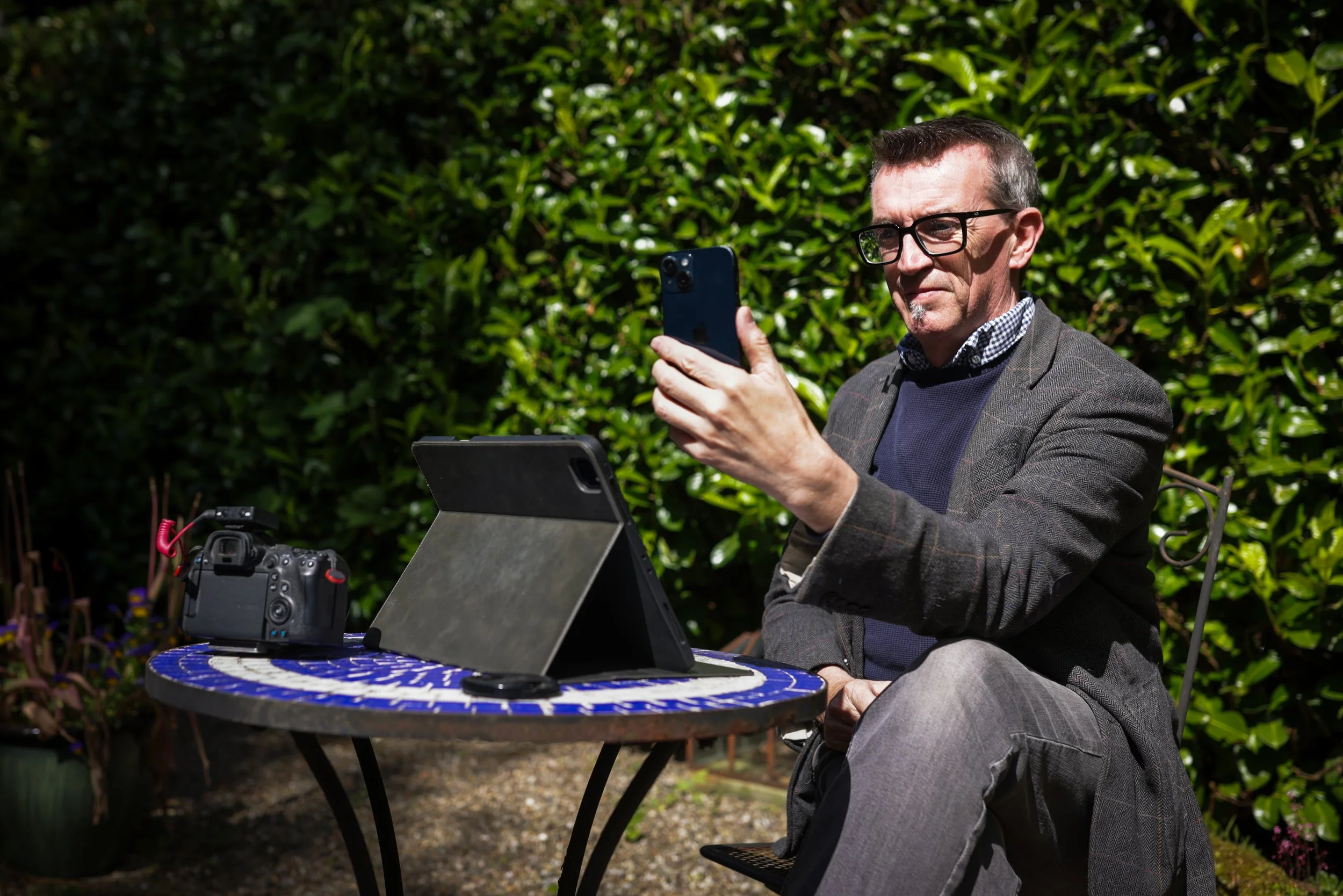
Today I create a lot of my own content. Sometimes I record on a phone. Other times I’ll use my mirrorless camera when I want more control over lighting or depth. But regardless of the equipment, the real challenge is understanding how the viewer needs to feel when watching.
That’s where photography and video become closely connected.
I’m a commercial photographer first, but over the years I’ve developed both skill sets and, to me, they’re deeply related disciplines. Both rely on understanding light, atmosphere, timing, composition and emotional response.
Both are about directing attention.
Both are about trust.
The businesses succeeding with video today are often the ones willing to communicate more openly and personally rather than hiding behind highly corporate messaging.
Ironically, that takes confidence.
A lot of people misunderstand authenticity and assume it means casual or careless content. It doesn’t.
Poor sound, weak lighting and rambling communication are not authenticity. They’re distractions.
The strongest modern content usually sits somewhere in the middle:
professional enough to hold attention,
human enough to build connection.
And I believe that balance is where modern visual communication is heading.
You’ve probably seen me on video somewhere online yourself. That alone says a lot about how powerful personal communication has become. A simple video recorded honestly can now reach thousands of people without needing a television crew or massive production budget.
The technology changed.
But human connection still matters most.