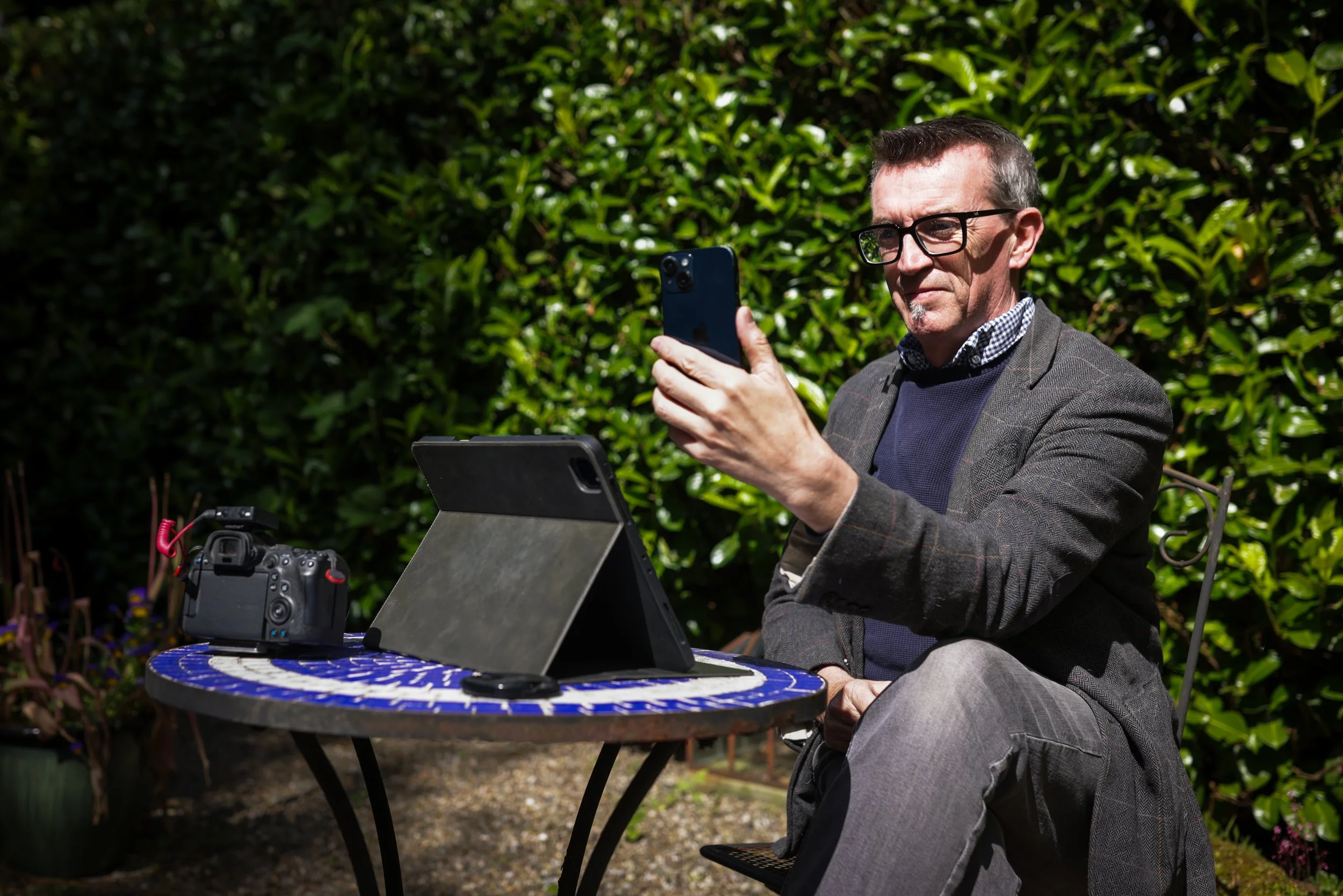
The camera was an iPhone. The result was BBC Breakfast.
I have just watched a TikTok about two BBC reporters who were sent to Rome for twelve hours.
They recorded the entire assignment using iPhones and small microphones. The footage was then edited into a report and broadcast on BBC Breakfast.
Think about that for a moment.
Footage recorded on a device millions of people carry in their pockets was considered good enough for one of the BBC’s flagship television programmes.
I’m a photographer, but I’m also a creative!
My interest in video did not begin with social media. I was recording video in the 1990s and remember editing it using Pinnacle. It was a much slower process than opening an app on a phone, but I loved taking separate pieces of footage and turning them into a finished story.
These days, I record my own promotional videos and show other people how to film themselves. The technology has changed enormously, but the creative thinking behind it has not.
You still need to recognise the story.
You still need to understand light, composition and sound.
You still need to know what to include, what to leave out and what you want the audience to feel.
As a professional photographer, I could easily feel threatened by the growing quality of mobile phone cameras. I have invested in professional cameras, lenses, lighting and years of experience.
But excellent phone footage does not make professional equipment or professional people redundant.
It reveals where the real value has always been.
The iPhones captured the pictures, but they did not decide what the story was.
They did not choose who to interview, recognise the important moments, compose the shots, listen for revealing answers or decide how the final piece should be structured.
The reporters did that.
The phone was the tool. Their judgement created the report.
That distinction matters because people often draw the wrong conclusion from examples like this.
They either say that expensive equipment is no longer necessary, or they dismiss phone footage as amateur.
Neither argument tells the whole story.
Professional cameras still offer greater control, better lenses, stronger performance in difficult conditions and much more flexibility. I would not abandon my Canon cameras and photograph every commercial assignment on my phone.
But an iPhone is now capable of producing remarkably good video when it is placed in the hands of someone who understands light, sound, composition, interviewing and storytelling.
The BBC example also underlines something many people overlook.
They used microphones.
People will often tolerate pictures that are not absolutely perfect, but poor sound can make even attractive footage difficult to watch. A simple microphone, thoughtful positioning and awareness of the surroundings can transform the result.
This is why I believe businesses need to stop thinking that video begins with buying more equipment.
Most business owners already own a camera capable of producing content that could represent them professionally.
What they often lack is the confidence to appear on camera, the ability to recognise a worthwhile story and the practical knowledge needed to record and edit it properly.
Buying another camera will not solve those problems.
An iPhone makes filming accessible. It does not make storytelling automatic.
A small business does not necessarily need a large production crew every time it wants to introduce a member of staff, explain a service, show how something is made or share a customer story.
Sometimes it needs an iPhone, a decent microphone, good light and somebody who knows what they are trying to communicate.
That is why I enjoy showing people how to film themselves.
It is not simply about teaching them where to position the phone or which button to press. It is about helping them become more comfortable on camera, recognise the stories inside their businesses and communicate those stories clearly.
I use professional cameras when an assignment requires them, but I also use my iPhone to create my own promotional videos and record business stories.
That is not lowering the standard.
It is choosing the appropriate tool for the job.
The standard should be judged by the finished result, not by the size of the camera used to create it.
Seeing iPhone footage broadcast on BBC Breakfast reinforces something I have believed for a long time.
Equipment matters, but it is rarely the thing holding people back.
The real barriers are confidence, clarity and skill.
If the BBC can send reporters to Rome with iPhones and microphones, a business can certainly begin telling better stories with the technology it already owns.
The question is no longer whether your phone is good enough.
The question is whether you know how to use it well enough.
Ray
#MobileJournalism #VideoContent #BusinessStorytelling #iPhoneVideo #ContentCreation