Planning for Rain on Your Wedding Day?

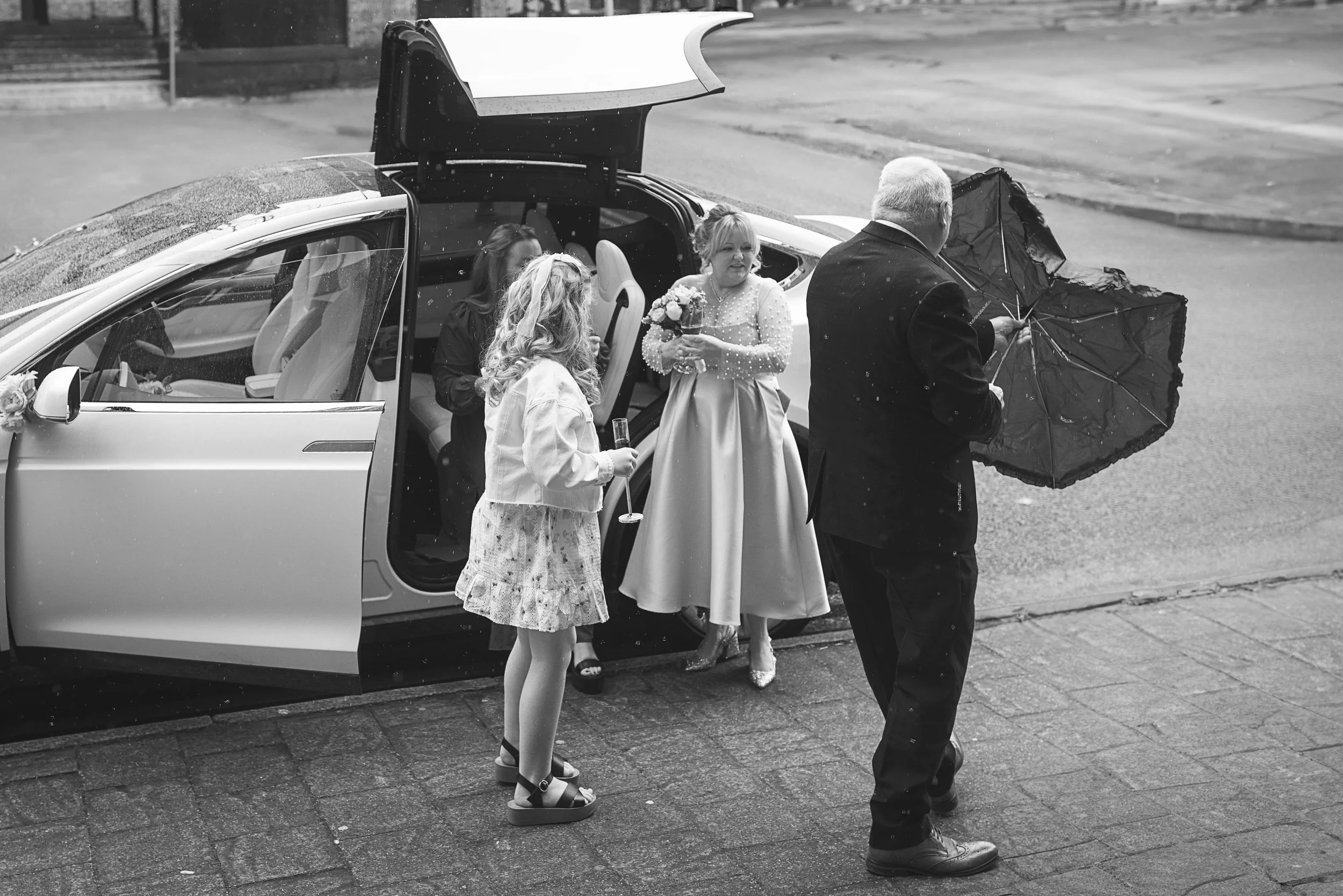
Let’s be realistic. For the last two summers, it’s been wet.

Planning for rain on your wedding day can ensure that the celebration remains enjoyable and memorable, regardless of the weather. Here are several points you can consider:

1. Choose a Venue with Indoor and Outdoor Options

Selecting a venue that offers both indoor and outdoor spaces can provide flexibility. In case of rain, the ceremony or reception can be moved inside quickly.

2. Rent a Tent

If you have your heart set on an outdoor wedding, renting a tent can be a great backup plan. Ensure the tent is large enough to accommodate all your guests and any additional elements like a dance floor or dining area.

3. Have a Rain Plan

Discuss and establish a clear rain plan with your wedding coordinator or planner. This should include alternative setups for the ceremony, cocktail hour, and reception. Make sure all vendors are informed and prepared for this contingency.

4. Provide Rain Accessories

Offer your guests rain accessories such as umbrellas, ponchos, etc. This not only keeps them dry but can also add a fun, cohesive element to your wedding photos.

5. Protect Décor and Equipment

Ensure that all décor and equipment, such as sound systems and lighting, are protected from the rain. Waterproof coverings or strategic placements can help safeguard these items.

6. Communicate with Guests

Keep your guests informed about the potential for rain and the backup plans. This can be done via your wedding website, invitations, or social media updates. Encourage them to dress appropriately for the weather.

7. Consider Flooring

If the ground is likely to get muddy or slippery, consider installing temporary flooring or mats in outdoor areas to ensure safe and comfortable walking paths for guests.

8. Embrace the Rain

Sometimes, despite the best plans, rain can be unavoidable. Embrace it! Rain can create beautiful, romantic photos and unique memories. Be ready to go with the flow and enjoy the moment.

9. Consult with Your Photographer

Discuss potential rain scenarios with your photographer. Professional photographers are often skilled at using rain to create stunning and unique photos, but it helps if they are prepared in advance.

10. Plan for Comfort

Ensure that there are adequate measures to keep everyone comfortable, such as heaters if it’s chilly or towels to dry off. A little thoughtfulness can go a long way in making sure your guests are happy.

11. Stay Positive

Finally, maintain a positive attitude. Weather is unpredictable, but your wedding day will be special regardless. Focus on the joy of the occasion rather than the imperfections.

By having a solid rain plan and being prepared for various scenarios, couples can ensure their wedding day remains special and memorable, even if the weather doesn't cooperate.

#weather #weddings #tips
Daylight White Balance

As a seasoned photographer who transitioned from film to digital, I've often found myself sticking to certain habits that have served me well over the years. One such habit is setting my camera to daylight white balance. In the era of film photography, the majority of the film available was balanced for daylight, and as I moved from film SLRs to digital and mirrorless cameras, I've continued this practice. Here's why I believe daylight white balance is a reliable choice for many photographers.

Understanding White Balance

White balance is a setting on your camera that adjusts the colors to ensure they look natural under different lighting conditions. The goal is to make whites appear white and colors look as true to life as possible. Different light sources have different colour temperatures, measured in Kelvin (K). For example, daylight has a color temperature of around 5500K, whereas incandescent light is much warmer, around 2700K.

The Appeal of Daylight White Balance

1. Natural Look: Daylight white balance mimics the natural light our eyes are accustomed to. This consistency helps in creating images that look natural and familiar, which is why it has been the standard for film photography.

2. Consistency: By keeping my camera set to daylight white balance, I ensure a consistent colour tone across my photos. This is particularly useful when shooting a series of images that need to have a uniform look, such as in a project or a photo essay.

3. Easier Post-Processing: Consistent white balance makes the post-processing stage more straightforward. If all images are shot with the same white balance, it's easier to apply batch corrections and achieve a cohesive look.

Daylight White Balance in Digital Photography

Digital cameras come with multiple white balance settings, including Auto, Tungsten, Fluorescent, Shade, and of course, Daylight. While auto white balance can be convenient, it often adjusts based on the scene, which can lead to inconsistencies in a series of shots.

Sticking to daylight white balance gives me control and predictability. I know how my images will turn out, and this control allows me to better visualize the final outcome while shooting. It's a throwback to the days of film, where the look of the image was dictated by the type of film used.

When to Deviate from Daylight White Balance

While daylight white balance is my go-to setting, there are instances where I make exceptions, especially when working with artificial light sources such as flash. Flash typically has a color temperature close to daylight, but depending on the modifiers used and the environment, it might require some adjustment.

In studio environments or when using flash, I might set a custom white balance to ensure accurate colour rendition. This involves using a grey card or white balance tool to measure the light and set a precise white balance in-camera.

In conclusion, daylight white balance is a dependable choice for photographers who want consistent, natural-looking images. It harkens back to the days of film, providing a familiar and reliable colour profile that simplifies the shooting and editing process. While there are times when other white balance settings or custom adjustments are necessary, daylight white balance remains a solid foundation for most of my photography work.

As you continue your journey in photography, don't be afraid to experiment with different settings to find what works best for you. But if you're looking for consistency and a natural look, daylight white balance is a great place to start.

Ray

My Journey as a Photographer

In my lifelong pursuit of photography, I've immersed myself in the study of light – its nuances, its subtleties, its transformative power. With every click of the shutter, I am reminded that light isn't just a tool; it's the very essence of my craft.

From the soft, ethereal glow of dawn to the harsh, angular shadows of midday, I've learned to decipher the language of light. It whispers secrets of mood and emotion, guides my composition, and shapes the narrative of each photograph.

There's a certain magic in soft light, gently caressing subjects with its diffused embrace. It imbues portraits with a sense of intimacy, highlighting every contour and texture with delicate grace. However, hard light casts bold, defined shadows, adding drama and depth to architectural forms or still life compositions.

Yet, it's the interplay of soft and hard light that truly captivates me. Mixing light sources allows me to sculpt scenes with dimension and complexity, weaving a tapestry of contrasts that draws the viewer into the frame.

As a photographer, I am not just a witness to light; I am its orchestrator, shaping its flow and intensity to reveal hidden truths and evoke profound emotions. Through careful observation and creative experimentation, I harness the power of light to transcend the ordinary and capture moments of extraordinary beauty.

So when you gaze upon my photographs, know that you're not just seeing an image; you're experiencing the convergence of art and science, where light reigns supreme as the ultimate medium of expression. And in that moment, I hope you'll see the world through my eyes – illuminated by the boundless possibilities of light and the transformative journey of photography.

Ray

Embracing the Evolution: From Professional Cameras to Smartphones

In the world of photography, there has long been a debate between traditionalists who swear by their professional cameras and those who have embraced the convenience and accessibility of smartphone technology. As a seasoned photographer myself, I was firmly in the former camp for many years. I relied on my professional cameras to capture stunning images, meticulously editing each one to perfection before sharing them with the world.

However, as time went on, I began to feel the weight of the cumbersome editing process and my cameras too! Hours spent behind the screen, fine-tuning every detail to meet the standards of professional photography, started to take its toll. It wasn't just about capturing the perfect shot anymore; it was about the laborious process that followed.

That's when I decided to take a leap and embrace the smartphone revolution. Initially skeptical, I soon discovered the power and efficiency of smartphones. Gone were the days of extensive editing and post-processing. With just a few taps, I could record a video, add a voiceover, and share my work with the world in a matter of minutes.

The convenience was undeniable, but I couldn't ignore the lingering doubts about the quality of smartphone footage. Would it be able to match up to the crispness and colour rendition of my professional cameras? No it doesn’t but I’ve learned to accept it because its’s behind the scenes photographs and video of me using my professional equipment for clients. Another point about social media is that it is not my shop window my website is and my website is the result of my hard work. All professional photographs!

While smartphones may not offer the same level of technical prowess as professional cameras, they more than make up for it in versatility and accessibility. The advancements in smartphone technology have led to significant improvements in image and video quality, with many flagship devices boasting impressive features such as high-resolution sensors and advanced image processing algorithms.

Moreover, the ability to capture behind-the-scenes moments in real-time adds a level of authenticity and immediacy to my work that was previously unattainable. No longer bound by the constraints of traditional photography, I can document my creative process as it unfolds, giving my audience a glimpse into the world behind the lens.

Of course, there are still limitations to smartphone photography and video, particularly when it comes to low-light conditions or dynamic range. However, I've found that with careful planning and creative problem-solving, these challenges can often be overcome.

In conclusion, while I may have started out as a staunch advocate for professional cameras, my journey into smartphone has been nothing short of transformative. Embracing the evolution of technology has allowed me to streamline my workflow, connect with my audience on a more personal level, and rediscover the joy of capturing moments in time.

#businessevolution

The Art of Food Photography: Why Rushing Is Not an Option

Are you a restaurant owner or a chef excited about launching a new menu? However, before you rush into having your dishes photographed, let's talk about the importance of time and patience in capturing the essence of your culinary creations. As a professional food photographer, I often encounter clients who underestimate the time and effort required to produce high-quality images of their menu items. Recently, a client approached me with the notion that photographing their new menu, consisting of about 20 dishes, would only take an hour. Let me set the record straight: capturing the beauty of each dish demands more than just a quick snapshot which anyone can do. It's an art form that requires meticulous attention to detail and careful planning.

Here's why:

Preparation is Key: Before even lifting my camera, I dedicate a significant amount of time to setting up my equipment and arranging the lighting to highlight the textures and colours of the food. This process alone can take at least half an hour to ensure optimal results.

Creativity Takes Time: Each dish is unique and deserves to be photographed in a way that showcases its best features. From finding the perfect angle to arranging garnishes and props, I invest around at least 10 minutes per dish to capture it in its full glory.

Freshness Matters: Food is at its most visually appealing when it's fresh out of the kitchen, with steam rising and garnishes vibrant. Rushing the photography process risks presenting your dishes in a less-than-appetising state, with wilted garnishes and diminished visual appeal.

Attention to Detail: I take pride in photographing each dish exactly as it was prepared by the chef, ensuring that every element is perfectly in place. This level of attention to detail is essential for conveying the quality and craftsmanship behind your culinary creations.

So, what's the bottom line? Rushing through the food photography process is a recipe for disappointment. By allowing adequate time and attention to detail, you're not just capturing images; you're telling a story about your brand and the passion you pour into your cuisine. To restaurant owners and chefs, I urge you to consider the value of investing time and resources into professional food photography. It's an investment that can elevate your brand, attract new customers, and ultimately contribute to the success of your business.

Remember, great food deserves to be presented in the best possible light. Don't rush the process—embrace it, and the results will speak for themselves.

Finding the right food photographer is crucial. Just like selecting a mathematics tutor, you wouldn't opt for someone who teaches a bit of everything; you'd choose a specialised maths teacher. Similarly, in food photography, selecting a photographer specialising in food is essential, rather than a generalist photographer.

#food #photography #skills

The Art of Food Photography: Why Experience Trumps Equipment

In the digital age, where the latest gadgets and gizmos dazzle with promises of superior performance, it's easy to fall into the trap of equating equipment with expertise. Nowhere is this more evident than in the realm of food photography. Aspiring photographers often tout their shiny new cameras or smartphones, believing that possessing the latest technology is all it takes to capture stunning food imagery. However, as seasoned professionals know all too well, the true essence of great food photography lies not in the equipment, but in the skill, experience, and artistic vision of the photographer.

It's a scenario that plays out time and time again: someone proudly flaunts their state-of-the-art camera or smartphone, claiming they can produce images on par with seasoned food photographers. Yet, upon closer inspection, their images fall short of expectations. Why? Because they lack the essential elements that define exceptional food photography: mastery of lighting, composition, aesthetics, and editing techniques.

The truth is, a camera is merely a tool—a conduit through which the photographer's vision is realised. Without the expertise to harness its capabilities effectively, even the most advanced camera will yield lackluster results. In the world of food photography, where every dish tells a story and every image evokes emotion, technical prowess alone is insufficient to capture the essence of culinary artistry.

Consider this analogy: If you were in need of a maths tutor, would you hire a general educator or a specialised maths teacher? The answer is clear. Similarly, when seeking a food photographer, it's imperative to choose someone with a deep understanding of the nuances of food styling, lighting techniques, and composition principles. A photographer who specialises in food photography brings a wealth of experience and a keen eye for detail to the table, elevating your culinary creations from ordinary to extraordinary.

Furthermore, the importance of experience cannot be overstated. Seasoned food photographers have honed their craft over years of practice, refining their skills through trial and error, experimentation, and continuous learning. They understand what works and what doesn't, leveraging their expertise to create images that captivate and inspire.

In contrast, entrusting your food photography needs to someone lacking specialised experience is akin to hiring a general contractor for roof repairs. While they may possess basic construction knowledge, they lack the specialised skills and expertise required to tackle complex roofing projects effectively. The result? Subpar workmanship and costly mistakes.

In conclusion, when it comes to food photography, the adage "you get what you pay for" rings true. Investing in a skilled food photographer may require a higher upfront cost, but the dividends in terms of quality and impact far outweigh the initial expense. So, the next time you're tempted to prioritize equipment over experience, remember: it's not the camera that makes the photographer—it's the photographer who makes the image. Choose wisely, and let your culinary creations shine through the lens of expertise.

Trusting Your Instincts in Business: A Lesson Learned

In the world of business, appearances can be deceiving. It's easy to be drawn in by glossy marketing or charming sales pitches, only to later discover that all is not as it seems. Yet, sometimes our instincts can offer invaluable insights that steer us away from potential problems.

I had an experience that reinforced the importance of trusting my gut feelings. It all began when I encountered a locally based wine business about two years ago. Upon visiting their establishment—a rather lacklustre large garage—I couldn't shake the feeling that something was not right. Despite the underwhelming visual presentation, I attributed it to the humble beginnings of a new enterprise. We all have to start somewhere, don’t we?

However, as I delved deeper into collaborating with this business, my suspicions grew. Spending an entire weekend photographing and videotaping their products, I took the precaution of watermarking my work. Call it intuition or a hunch, but I sensed that all was not right with this venture.

Weeks passed, yet I never received any communication from the business regarding my efforts. Curiosity piqued, I decided to investigate further. To my astonishment, I discovered that the company had filed for insolvency back in 2021. Despite this, they continued to operate well into 2022, during which time I had provided my services.

A quick search on review websites confirmed my suspicions. The business was drowning in a sea of negative feedback, with allegations of unpaid debts and dissatisfied customers.

Reflecting on this experience, I couldn't help but marvel at the accuracy of my initial instincts. While it may be tempting to overlook red flags in pursuit of opportunity, this episode served as a poignant reminder of the importance of intuition in business dealings.

In a world where trust can be elusive, learning to listen to our inner voice becomes a vital skill. Whether it's a feeling of unease during a meeting or a nagging doubt about a potential partnership, these gut reactions should not be dismissed lightly. More often than not, they serve as early warning signs, guiding us away from potential disasters.

So, what have I learned from this encounter? Simply put, to always trust my instincts. While data and analysis have their place, there's no substitute for that innate sense of knowing when something just doesn't add up. In a landscape rife with uncertainty, it's our intuition that can serve as our most reliable compass, steering us towards safer shores.

As I navigate the ever-changing currents of the business world, I'll be sure to keep this lesson close at hand. After all, when it comes to making sound decisions, sometimes the best advice comes from within.

#business #intuition

The Rise of AI in Food Photography: Navigating Authenticity in Visual Content

As a food photographer and visual creator, I've observed a trend emerging in the industry: the increasing use of AI generated images in advertising and marketing campaigns. While AI technology undoubtedly offers incredible opportunities for creativity and efficiency, it also raises important questions about authenticity and transparency.

In recent times, I've noticed AI generated images being seamlessly integrated into advertisements, often without clear attribution or acknowledgment. This blurring of lines between AI generated and human captured content can lead to confusion among consumers, who may not always be aware that the images they see have been created using artificial intelligence and not by the advertisers.

As creatives, we understand the power of AI as a tool for generating visual ideas and exploring new concepts. I, too, have experimented with AI to brainstorm and conceptualise visual content. However, I firmly believe in the importance of maintaining transparency and integrity in our work.

Using AI generated images in advertising without disclosure not only undermines the trust between brands and consumers but also diminishes the value of genuine human creativity and craftsmanship. As professionals in the field, it's essential for us to uphold ethical standards and be transparent about the use of AI technology in our work.

Moving forward, let's embrace AI as a powerful tool for innovation while also prioritizing authenticity and transparency in our visual storytelling. By being honest and open about the role of AI in our creative process, we can build trust with our audience and continue to push the boundaries of visual excellence.

#AI #FoodPhotography #Authenticity #Transparency

Internet Trolls

Encountering trolls in life, prior to the era of social media, was akin to the ones depicted in "The Three Billy Goats Gruff" fairy tale!

We've all encountered comments on our social media posts that seemed odd or were simply written to provoke a response. However, when you click on the writer's profile, they often reveal very little information or have sparse content.  These people are real world trolls.

Dealing with internet trolls necessitates patience and strategy. Here are some tips I use:

1. Don't take it personally: Remember that trolls often target people randomly or to elicit a reaction. Try not to internalise their comments.

2. Ignore or block: If the troll's behavior isn't too severe, ignoring or blocking them can be effective. It denies them the attention they seek and removes their ability to continue harassing you.

3. Respond strategically: If you choose to respond, keep your reply brief and neutral. Avoid becoming emotional or engaging in arguments, as this is often what trolls desire.

4. Report abuse: Many social media platforms have tools for reporting abusive behavior. Use these features to report the troll's actions to the platform administrators.

5. Document the harassment: Keep records of any harassing messages or interactions. This documentation can be useful if you decide to take further action, such as reporting the troll to the police.

6. Seek support: If the trolling becomes overwhelming or begins to affect your mental health, don't hesitate to reach out to friends, family, or a support group for assistance.

Remember that dealing with trolls can be frustrating, but it's essential to prioritise your well being and safety while navigating online interactions.

Internet Trolls

An internet troll is someone who deliberately provokes or harasses others online by posting inflammatory or offensive comments, messages, or content. Trolls often aim to disrupt online discussions, sow discord, or simply get a reaction from others. They may target individuals, groups, or entire communities, and their behavior can range from mild annoyance to severe harassment.

Dealing with internet trolls requires patience and strategy. Here are some tips:

1. Don't take it personally: Remember that trolls often target people randomly or to get a reaction. Try not to internalize their comments.

2. Ignore or block: If the troll's behaviour isn't too severe, ignoring or blocking them can be effective. It denies them the attention they seek and removes their ability to continue harassing you.

3. Respond strategically: If you choose to respond, keep your reply brief and neutral. Avoid getting emotional or engaging in arguments, as this is often what trolls want.

4. Report abuse: Many social media platforms have tools for reporting abusive behaviour. Use these features to report the troll's actions to the platform administrators.

5. Document the harassment: Keep records of any harassing messages or interactions. This documentation can be useful if you decide to take further action, such as reporting the troll to law enforcement.

6. Seek support: If the trolling becomes overwhelming or begins to affect your mental health, don't hesitate to reach out to friends, family, or a support group for assistance.

Remember that dealing with trolls can be frustrating, but it's essential to prioritise your well-being and safety while navigating online interactions.

Embracing Authenticity: My Journey in Commercial Food Photography

In the realm of food photography, I stand apart from the crowd. While others confine themselves to studios, I venture into the heart of hotels, restaurants, and gastro pubs, seeking to capture the true essence of culinary artistry.

My approach is unconventional yet deeply rooted in authenticity. Instead of relying on artificial lighting setups in a studio, I embrace the challenge of working with available light and mobile studio lighting, crafting images that reflect the ambiance and character of each establishment. Whether it's the soft glow of candlelight or the vibrant hues of a bustling restaurant, I strive to weave a narrative that transports viewers into the heart of the dining experience.

What truly sets me apart is my dedication to capturing the moment as it unfolds. Rather than staging elaborate compositions, I prefer to let the magic of the kitchen take center stage. I patiently wait for the chef to plate up each dish, seizing the opportunity to immortalise the fleeting beauty of culinary creations in their purest form.

But my creativity knows no bounds. From the edge of a bar to the cozy confines of a chair, I fearlessly explore unconventional vantage points, infusing each image with a sense of spontaneity and dynamism. By incorporating elements of décor, furnishings, and color palettes into my compositions, I create images that not only showcase the food but also tell a compelling story of the place it inhabits.

In a world saturated with staged perfection, I choose to celebrate imperfection and spontaneity. Through my lens, I invite viewers to embrace the rich tapestry of flavors, textures, and experiences that define the culinary world. So the next time you dine out, keep an eye out for me, the photographer who's redefining food photography one image at a time.

A Client's Guide to Preparing for a Food Photoshoot: Ensuring Stunning Results

In the competitive landscape of food marketing, captivating imagery plays a crucial role in enticing customers and showcasing culinary delights. Whether you're a restaurant owner, food vendor, or culinary entrepreneur, investing in professional food photography can elevate your brand and attract a wider audience. To ensure a successful photoshoot that effectively captures the essence of your cuisine, here's a comprehensive guide on how to prepare as the client:

1. Define Your Objectives:

Before diving into the photoshoot process, clearly define your objectives and expectations. Determine the specific dishes or products you want to highlight, as well as the overall aesthetic and style you wish to convey. Communicate your brand identity, target audience, and desired outcomes to the photographer to ensure alignment from the outset.

2. Collaborate with the Photographer:

Selecting the right photographer is crucial for achieving your vision. Choose someone with experience in food photography and a portfolio that resonates with your brand. Schedule a consultation to discuss your ideas, preferences, and any specific requirements you may have. Collaborate closely with the photographer throughout the planning process to ensure a seamless photoshoot experience.

3. Curate Your Menu:

Carefully curate the menu or selection of products that will be featured in the photoshoot. Choose items that are visually appealing, representative of your culinary offerings, and likely to resonate with your target audience. Consider seasonal ingredients, signature dishes, and best-sellers to showcase the diversity and quality of your cuisine.

4. Source High-Quality Ingredients:

To achieve stunning results, prioritise the use of fresh, high-quality ingredients for the photoshoot. Select produce that is ripe, vibrant, and visually appealing. Work closely with your suppliers to ensure timely delivery of fresh ingredients that will showcase your dishes in the best light.

5. Prepare Food Styling Guidelines:

Food styling plays a crucial role in creating enticing images that capture the essence of your cuisine. Develop clear guidelines and instructions for food styling based on your brand aesthetic and preferences. Provide examples, references, and inspiration images to guide the styling process and ensure consistency across all dishes.

6. Coordinate Props and Accessories:

Select props, tableware, and accessories that complement the style and theme of your photoshoot. Consider factors such as colour palette, texture, and branding when choosing props to enhance the visual appeal of your images. Coordinate with the photographer to ensure that props are selected and arranged in a way that enhances the overall composition without overshadowing the food.

7. Arrange Logistics and Schedule:

Plan logistics and scheduling details well in advance to ensure a smooth photoshoot experience. Coordinate with the photographer to determine the date, time, and location of the shoot, as well as any additional services or equipment that may be required. Allocate sufficient time for setup, styling, and photography to allow for creative exploration and attention to detail.

8. Communicate Brand Guidelines:

Communicate your brand guidelines, visual identity, and brand story to the photographer to ensure alignment with your brand values and messaging. Provide any logos, branding materials, or specific requirements related to branding and packaging that should be incorporated into the images.

9. Prepare for Feedback and Collaboration:

Be open to feedback and collaboration throughout the photoshoot process. Review test shots, provide input on composition and styling, and offer constructive feedback to ensure that the final images meet your expectations. Collaborate closely with the photographer to make adjustments and refinements as needed to achieve the desired results.

10. Plan for Promotion and Distribution:

Once the photoshoot is complete, plan for the promotion and distribution of your images across various marketing channels. Consider how you will leverage the images on your website, social media platforms, menus, promotional materials, and advertising campaigns to maximise their impact and reach.

By following these guidelines and collaborating closely with your photographer, you can prepare for a food photoshoot that effectively showcases your culinary creations and strengthens your brand identity. With careful planning, attention to detail, and creative collaboration, you can ensure stunning results that captivate your audience and drive engagement with your brand.

Ray

Chasing Michelin Stars: A Food Photographer's Journey

As a seasoned food photographer with numerous accolades under my belt, including awards from the prestigious Pink Lady Food Photographer of The Year, I find myself at a pivotal moment in my career. While I've savored the satisfaction of capturing culinary creations in various settings, there's a lingering aspiration that has fueled my creative drive: the pursuit of Michelin-starred restaurants.

For me, photographing food extends beyond mere visual representation; it's about storytelling through images that evoke emotion and intrigue. The prospect of collaborating with Michelin-starred establishments excites me not only for the opportunity to capture the artistry of their dishes but also to immerse myself in the unique ambiance of their dining spaces.

With each click of my camera shutter, I aim to convey the essence of haute cuisine—the meticulous attention to detail, the vibrant colours, and the symphony of flavors meticulously crafted by culinary maestros. My artistic style, characterised by a blend of elegance and sophistication, aligns seamlessly with the refined aesthetics of Michelin-starred dining experiences.

Entering this year's Pink Lady Food Photographer of The Year competition marks more than just another accolade on my shelf; it symbolizes a concerted effort to chart a course toward the pinnacle of gastronomic excellence. By showcasing my portfolio of meticulously curated images, I hope to demonstrate my commitment to elevating the visual narrative of fine dining and establishing myself as a trusted collaborator within the Michelin-starred culinary community.

As I embark on this journey down the Michelin route, I am filled with a sense of anticipation and determination. With each photograph, I inch closer to realizing my dream of capturing the essence of Michelin-starred cuisine through the lens of my camera. And while the road ahead may be challenging, I am fuelled by passion and inspired by the endless possibilities that await in the world of haute gastronomy.

Ray

Embracing the Mirrorless Revolution: A Photographer's Perspective

In the fast-evolving realm of photography, I made a pivotal decision two years ago that changed my entire perspective – I transitioned to mirrorless cameras, and the experience has been nothing short of transformative.

One of the paramount advantages that immediately drew me towards mirrorless technology was the ability to preview my shots with unrivaled precision through the digital viewfinder. Unlike the analogue viewfinders of traditional DSLRs, the digital viewfinder of my mirrorless camera provides an exact representation of the scene, allowing me to see precisely what I'm about to capture. This real-time feedback enhances my creative process and ensures that I can fine-tune my composition before pressing the shutter button.

The primary catalyst for this camera transition was the persistent focus issues I encountered with my digital SLRs. The analogue viewfinders occasionally struggled to nail the focus accurately, leading to frustrating instances of missed shots and the need for frequent lens calibrations. Enter mirrorless cameras, and this problem became a relic of the past. The advanced autofocus systems in mirrorless cameras have not only eradicated focus inconsistencies but have also saved me both money and time previously spent on sending my lenses for calibration.

Embracing mirrorless technology has not just been a shift in gear; it's been a game-changer for my photography journey. The assurance of precise focus coupled with the convenience of a digital viewfinder has elevated my creative process, making every shot a confident and calculated capture. As I reflect on the past two years, I can confidently say that I haven't looked back since making the switch to mirrorless – it's a decision that has enriched my photographic endeavours in more ways than one.

Ray

Trendy Lightroom/Photoshop Filters

I’ve discussed many, many times over the years to trainees especially, several reasons why I don’t use those filters that are trendy especially on Instagram.

Using and buying Lightroom presets can have both advantages and disadvantages. Here are some of them:

Advantages:

1. Time-Saving: Lightroom presets can help save time by quickly applying predefined adjustments to your photos. This can be especially useful when editing large batches of photos with similar characteristics.

2. Consistency: Using presets can help maintain a consistent look and feel across your photos or a specific project. Presets provide a set of predefined adjustments that can be applied uniformly, reducing the need for manual fine-tuning.

3. Learning Tool: Presets can serve as a valuable learning tool for those new to photo editing. By analyzing the adjustments applied in a preset, you can understand how different settings impact the overall look of a photo.

4. Customization: Most presets can be further adjusted to suit your specific needs. This allows you to tailor the preset to your desired outcome, giving you more flexibility and control over your editing process.

Disadvantages:

1. Generic Look: Since presets are created to work on a wide range of photos, they may produce a generic look that lacks uniqueness. This can be a downside for photographers looking to develop their signature style or create a one-of-a-kind look in their images.

2. Presets are purchased by many other photographers resulting in a look that is not unique but often in trend. Trends change after time and can and do look dated.

2. Limited Creativity: Relying heavily on presets may restrict your creative freedom. Presets provide a set of predefined adjustments, and while you can customize them to some extent, they may not always allow for the full expression of your unique vision.

3. Inconsistency: Presets that work well on some photos may not produce the desired results on others. This can lead to inconsistency in the editing process, requiring additional manual adjustments to achieve the desired outcome.

4. Cost: While there are many free presets available, premium and high-quality presets can be expensive. Purchasing presets can add extra costs to your editing workflow, especially if you require multiple presets for different types of photography.

5. Images of food, products, interiors, etc that depend on colour accurately would be ruined by the appliance of filters.

It's worth keeping in mind that presets should be used as a starting point for editing rather than a one-size-fits-all solution. Experimentation, personalization, and manual adjustments are often needed to achieve the best results.

I do experiment with filters on my World Instagram page but as far as commercial photography is concerned, I aim for colour correct or as near to real life as possible.

Which do you prefer in the below image?

#filters #editing

A Sidestep With Social Media

I have recently made the decision to limit myself on social media, and the results have been truly liberating. It reminds me of when I chose to stop watching news channels during the height of the Covid pandemic. Instead, I started conducting my own research and gathering information without the influence of others' biases. This continues today.

I have experienced an incredible sense of freedom. I have been able to focus on real life interactions, which has had a tremendous positive impact on my mental well-being. I no longer feel the urge to constantly check my social media feeds or feel compelled to share every aspect of my life with the world. My privacy, which I value greatly, has been restored.

Moving forward, I plan to re-engage with social media, but with less frequency and a greater emphasis on real life interactions. Fortunately, I have lived through times when social media and the internet did not exist and by recreating those experiences, I have gained immense enrichment.

I encourage you to give it a try. You might discover that stepping away or limiting your time on social media can greatly enhance your life in so many ways.

Happy New Year when it gets here.

Private Charitable Acts

As professionals, we often find ourselves engaged in discussions about networking, personal branding, and showcasing our achievements. While these topics can be important in advancing our careers, there's one area where I prefer to take a different approach: my charitable activities.

Recently, I attended a networking event on the Wirral where I was met with a flippant comment that struck a nerve. "It's for charity, you know you do things for free for them," someone quipped, assuming that because I keep my charitable activities private, they hold little significance. But let me assure you, that couldn't be further from the truth.

For me, supporting charities has always been deeply personal. I believe that acts of giving should arise from a genuine desire to make a positive impact, rather than seeking recognition or praise. Keeping my charitable endeavors private allows me to focus on the true essence of giving – helping others.

Choosing not to broadcast my charitable activities doesn't diminish their importance or impact. In fact, it strengthens the authenticity of my intentions. Every action taken in support of a charity or extending kindness to those in need is a heartfelt decision for me, irrespective of whether it's publicised or not.

Charitable giving is not about gaining attention or accolades; it's about making a difference in the lives of others. It's about lending a helping hand, supporting causes close to our hearts, and building a better world for everyone. And in doing so, we can create a ripple effect of kindness that transcends beyond ourselves.

Remember, it's not about how loudly we announce our deeds; it's about the lasting impact we create in the lives of those we touch.

#privatecharitableacts #humblegiving

Lens Choice: The Art of Photography

When it comes to choosing the perfect lens for any photography situation, it requires a certain level of experience with lenses of various focal lengths and understanding their impact on different subjects.

For instance, portraits tend to look their best when taken with a longer focal length, such as 85mm. Beyond this focal length, portraits really shine. They possess a stunning slimming effect and the background blur takes on a painterly quality.

On the flip side, wide-angle lenses like 24mm and wider can also be used for portraits, but caution must be exercised due to significant distortion, especially towards the edges of the photograph. To minimize this distortion, it's advisable to keep the subject in the center of the frame.

These days, many smartphones boast extreme wide lenses, which are fantastic for capturing breathtaking landscapes. However, I've been noticing an abundance of photos featuring groups of people, with those on the edges appearing extremely distorted. If you need to capture a group shot, my recommendation would be to take a step back and zoom in, allowing for a more visually pleasing image.

In conclusion, mastering the art of lens choice requires a deep understanding of various focal lengths and their impact on different subjects. Whether it's capturing the perfect portrait or a sprawling landscape, selecting the right lens is a vital element in achieving stunning, well-balanced photographs.

#photography #lenses

A Heartfelt Visit to My Dear Friend, Gavin

It is with a heavy heart that I sit down to write about my recent visit to an old friend of mine, Gavin. We were at secondary school together. However, life has a way of taking unexpected turns, and sadly, Gavin's health has noticeably deteriorated since my last visit a few months ago.

The emotions that swirled within me as I approached his doorstep were a mixture of excitement and trepidation. I couldn't help but wonder what I would find behind that door – a friend still brimming with life or a shadow of the person I once knew. When Gavin opened the door, his eyes seemed distant, and it took him a few moments to recognise me. The genuine warmth that used to light up his face was replaced with a weary smile, a hollow reflection of the vibrant person I remember.

As we sat down to catch up, I couldn't help but notice the profound change in Gavin's appearance. His once robust frame had withered, and his hands, once strong and steady, now trembled slightly. It was disheartening to witness this physical deterioration firsthand, a stark reminder of the fragility of life.

We reminisced about our shared memories, laughing and recalled our adventures. Gavin's eyes would occasionally light up with fragments of his former vigor, but they were fleeting moments amidst a sea of exhaustion. Despite his waning physical health, his spirit remained resilient, and he spoke with a wisdom borne from the trials life had thrown his way.

As the visit came to a close, I couldn't shake the sadness that lingered within me. The reality of mortality had stared me in the face, and it was a stark reminder of the fleeting nature of our existence. It made me reflect on the importance of cherishing connections, not taking friendships for granted, and embracing the precious moments we have with our loved ones.

My visit to Gavin was bittersweet, a poignant reminder that life's journey can take unexpected detours. Though it was difficult to witness the toll that time had taken on him, I am grateful for the opportunity to reconnect, to hold his hand, and to express my unwavering support and love. Gavin may be facing challenges, but his enduring spirit serves as a reminder to find strength in the face of adversity.

Today, I am reminded that life is a fragile gift, and the bonds we forge with others are among the most precious treasures we possess. It is up to us to nurture those connections, to show up for one another, and to lend a shoulder to lean on during difficult times.